Introduction to BIAN
The Banking Industry Architecture Network (BIAN) is a global standard framework created to help banks and financial institutions simplify, standardize, and modernize their IT architecture. By adopting BIAN, financial institutions can ensure better interoperability, reduce complexity, and improve flexibility across their systems.
BIAN Structure Overview
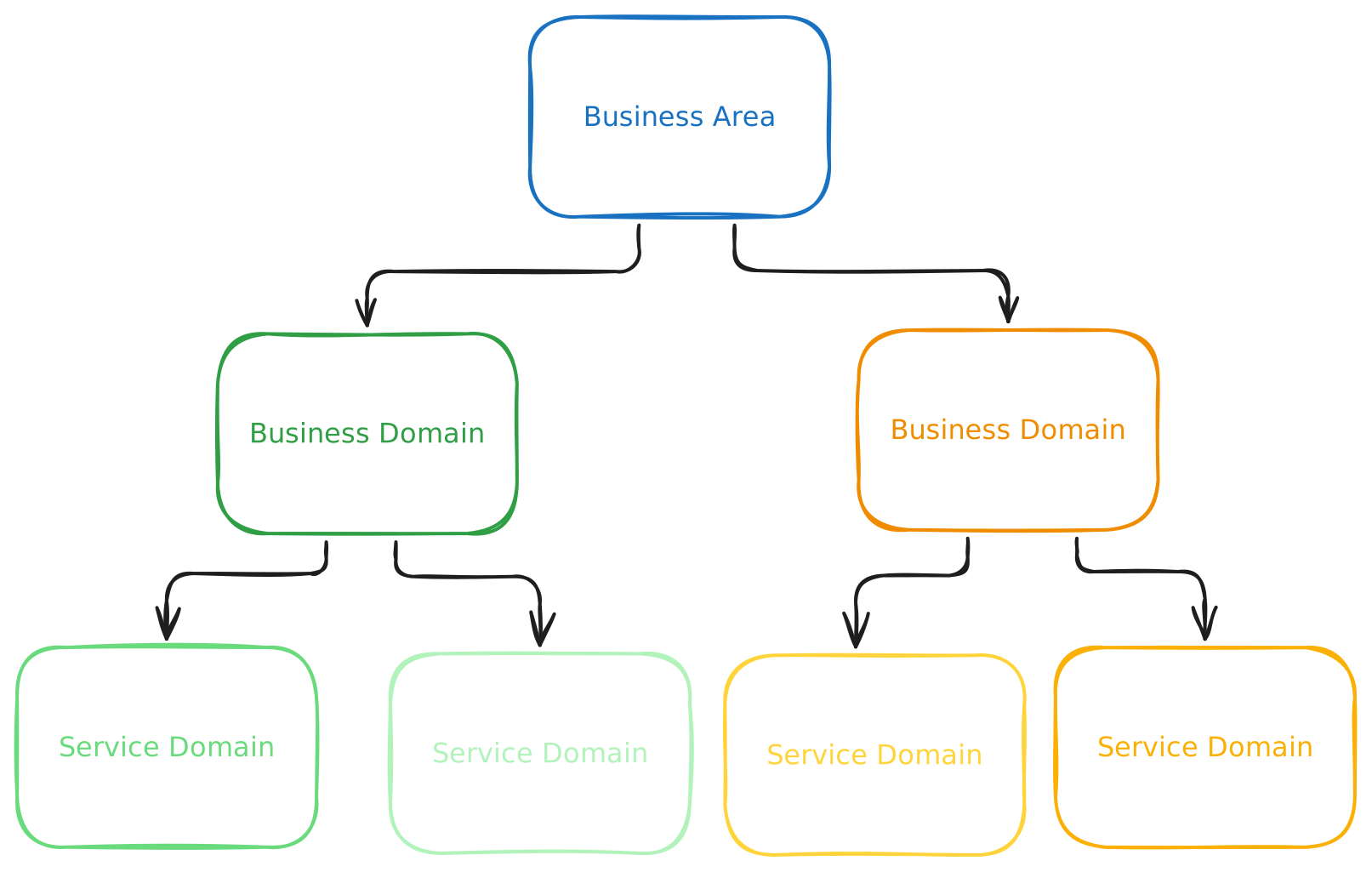
BIAN is organized into a structured hierarchy that helps financial institutions map their business functions to a clear architectural framework. This structure is divided into three main layers: High-Level Business Areas, Business Domains, and Service Domains.
1. High-Level Business Areas
High-Level Business Areas represent broad categories of banking operations, such as customer management, operations, and risk. These areas define the core activities that make up the entire banking value chain.
2. Business Domains
Business Domains further subdivide each High-Level Business Area into more focused segments. For instance, under the "Customer Management" area, there may be domains like "Customer Relationship Management" and "Product Management." Each domain groups related business functions together.
3. Service Domains
Service Domains are the most granular level of the BIAN framework. Each Service Domain defines a specific set of capabilities that supports a business function, such as "Loan Origination" or "Payment Execution." These are the functional building blocks of a bank's architecture.
BIAN API Specifications
To further standardize the architecture, BIAN defines API specifications under each Service Domain. These APIs ensure that different components of a bank's systems can communicate seamlessly with each other, enabling efficient integration across diverse platforms and applications.
By following BIAN's well-defined service domains and API specifications, banks can reduce integration costs, accelerate digital transformation, and provide more agile services to customers.
Key Benefits of BIAN
- Standardization across the banking ecosystem
- Improved interoperability of systems and services
- Reduced complexity in IT architecture
- Enhanced flexibility and agility for future innovations
Implementing BIAN is a key step toward modernizing a bank's IT landscape, reducing legacy system dependencies, and enabling smoother digital transformations.